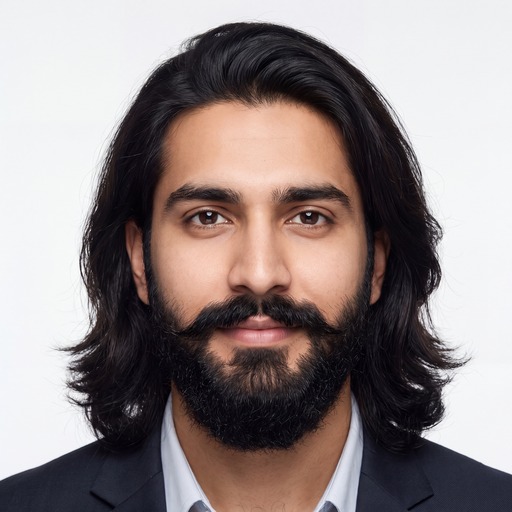
About Vivek Sharma
Vivek Sharma, the founder & lead prompt architect at Editing Forge, and a generative AI visual specialist. He's a prompt engineer, visual editor, and the mastermind behind Editing Forge - with over six years experience in digital photography, color grading and commercial image retouching. He made the switch to generative AI pretty early on when latent diffusion architectures were first popping up - and now he focuses on crafting prompts that really deliver. The kind that produce natural, real-to life photos without the weird distortions we've all come to expect from tools like Google Gemini and OpenAI’s ChatGPT.
Vivek started Editing Forge because he noticed that a whole lot of creators, designers & hobbyists were fed up with those frustrating issues - like skin tones looking all wax-like, anatomy getting all wonky, fingers appearing out of thin air and compositions going haywire. So his vision was clear: create an open-access, no-cost prompt library where every single prompt formula is tested, tweaked and calibrated to match real-world physics, and ready for a one-click copy-paste.
Areas of Technical Expertise
Modern prompt engineering is a far cry from just throwing some buzzwords on paper; it requires a deep understanding of how neural diffusion models actually work - and how to make them work for you. Vivek spends his days researching and crafting prompts that tap into a few key areas of technical know-how:
-
Inside the Diffusion Engine: He's got a deep understanding of latent diffusion workflows, token prioritisation, negative space prompting, and all the inner workings of leading engines like Google Gemini,ChatGPT, Bing Image Creator, Midjourney, and Stable Diffusion The ones that really matter.
-
Bringing Real Cameras into the Mix: He's figured out how to integrate the physics of real cameras into his prompts - including specific lenses (like a 28mm doc lens or a 50mm for a more natural look) and aperture settings (from all the way open to a tiny f/8 to get all that fine environmental detail). He also wants to avoid the flat, synthetic look of pure CGI
-
Lighting that really looks like it's from the real world: He's got a keen eye for the way light behaves in the real world - and he's built prompts that can replicate all that. Think Rembrandt key lighting, subtle window bounce or even volumetric golden hour haze. He wants his subjects to feel like they're really there.
-
Getting down to the little details: He's got a thing for adding in tiny realistic details like human skin pores, facial asymmetry or even the way fabric really looks. He wants his subjects to feel like they're part of the real world, not some over-processed image.
-
Stopping all those weird distortions dead in their tracks: And finally, he's developed some pretty clever techniques for stopping all those weird distortions we all hate - like warped hands, blurred earlobes, overlapping limbs and all the rest. He's all about finding ways to keep AI from messing up.
The Editing Forge Testing Methodology.
To stop people from throwing away their time or getting nicked with too many generation credits on a dud prompt, Vivek insists on a rock-solid, four-stage manual quality control system for every prompt that gets uploaded to Editing Forge.
Phase 1: Getting a Clear Idea and Constructing the Right Language
Vivek starts by coming up with a distinct visual look and style - we're talking 90s movie film photography up to super-realistic portraits of couples and detailed 3D avatars. Then he writes the prompt using a tried and tested formula that breaks down the main subject, lighting, framing and background into separate bits that can be mixed and matched.
Phase 2: Stress Testing Across Different AI Models
A single prompt has to work consistently across all the different AI engines out there. Vivek puts the formula through its paces by generating loads of images across Google Gemini, ChatGPT (DALL-E 3), and Bing Image Creator - and he's not content unless he can get at least 10 to 15 different seeds looking good on each model. If a prompt's a bit hit and miss, it gets completely reworked from scratch.
Phase 3: Checking the Fine Details
Each batch of generated images gets a close-up inspection for all the fine details - from fingernail lengths to eye pupils to hair boundaries and background depth. And if a prompt's causing the AI to smooth out all the imperfections, he swaps in some optical keywords to make it draw the imperfections instead.
Phase 4: Prepping for Instant Use
Once it's all been honed to perfection, the prompt gets stripped down to the bare essentials, free of any unnecessary clutter - and formatted with clear, easy-to-understand placeholder text so visitors can easily copy and paste their own details in and out.
Creative Philosophy - Bringing a Human Touch to Generative Art.
For Vivek, prompt engineering is an art in its own right - and he believes that the best results come from understanding what the AI is actually good at, and using that to guide the whole process. He's a firm believer that AI engines don't know about emotion or lighting or any of that stuff - they just follow the numbers. And that's what prompt engineering is all about - nudging those numbers to get a better image.
When you see an AI image that looks rubbish, the problem's not the engine, it's the prompt. The engine's just following the numbers - you have to guide it in the right direction.
Vivek's big goal is to make it easier for new creatives and artists to get off the ground, by offering these tested and accurate prompt blueprints completely for free - so they can get on with making great images without having to waste hours fiddling with things.
Editorial Standards and Quality Pledge
You can rely on me - Vivek, the one person who reviews and posts every formula and prompt on Editing Forge - to uphold a rock solid set of editorial principles, which helps keep the community's trust at the forefront of everything I do:
-
The Real Deal - 100% Manually Verified: No automated bots or dodgy prompts ever make it onto Editing Forge. Every single prompt goes through my hands and gets thoroughly tested before being published.
-
Playing by the Rules: I make sure that every prompt template sticks to the safety and acceptable use rules set out by Google and OpenAI, so we don't run into any trouble while still producing some really amazing, high-quality results.
-
We're a Moving Target: Because AI models are always changing and updating, I continually re-test and re-release updated libraries to keep all our existing prompts in working order.
-
Open Books and Open Minds: And the best part is that all our prompt blueprints remain completely free and open to anyone - whether you're a student, an artist or just a hobbyist who wants to get creative.
Get in Touch with Vivek Sharma
I'm always here to chat about the nitty-gritty of prompts, models or pretty much any other creative project you're working on. Drop me an email or send a message through the Contact us page - I'd love to hear it.
- Email: editingforge@proton.me
- Contact Form: Just fill in our Contact Us form and I'll get back to you as soon as I can.